
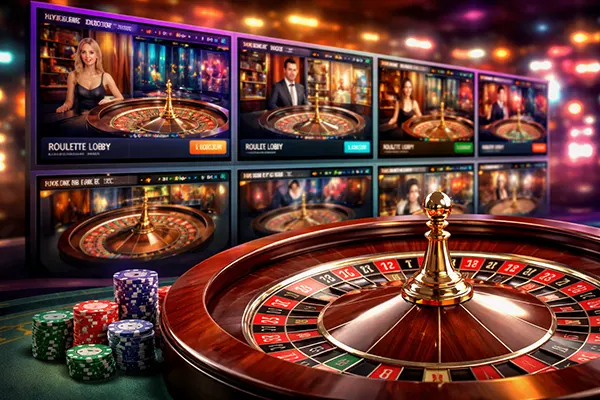
Roulette Lobby Design: How Table Sorting, Filters and Previews Shape Player Choice
The layout of a roulette lobby is not just a visual layer — it directly affects how players navigate options, assess risk and ultimately decide where to place their time and money. In modern online casinos, especially in 2026, interface design has evolved into a behavioural tool. Sorting systems, filters and table previews are carefully structured to reduce friction, highlight certain tables and guide user attention in subtle but measurable ways.
The Role of Table Sorting in Player Decision-Making
Sorting mechanisms are often the first interaction a player has with a roulette lobby. Whether tables are arranged by popularity, betting limits, speed or provider, this initial order frames perception. For example, placing “most popular” tables at the top creates an implicit signal of trust, even though popularity may be driven by algorithmic promotion rather than real user preference.
In 2026, many operators use dynamic sorting, where table positions change based on user behaviour, region or device type. This means two players may see completely different lobbies at the same moment. From a usability perspective, this improves relevance, but it also reduces transparency, as players are not always aware that the order is personalised.
Another key factor is the presence of “featured tables”. These are often highlighted separately from standard sorting rules and tend to receive disproportionately higher traffic. Players frequently interpret these placements as recommendations, even when they are commercially driven placements rather than quality indicators.
How Sorting Influences Perceived Trust and Risk
When tables are sorted by low minimum bets, beginners are more likely to engage quickly, as the perceived risk is reduced. Conversely, sorting by high-stakes tables can signal exclusivity and attract experienced players looking for larger action. This dual strategy allows operators to segment audiences without explicitly stating it.
Speed-based sorting is another growing trend. Fast tables are often placed higher for mobile users, as shorter rounds align better with quick sessions. However, faster gameplay can lead to more rapid betting cycles, which directly affects spending patterns over time.
Importantly, players rarely question why certain tables appear first. The default order becomes the “recommended path”, meaning sorting is not neutral — it actively shapes behaviour through subtle prioritisation.
Filters as a Tool for Control and Simplification
Filters give players the impression of control, allowing them to narrow down options by criteria such as table limits, game type (European, American, Lightning Roulette), dealer language or provider. In practice, well-designed filters reduce cognitive overload in large lobbies with hundreds of tables.
In recent years, filtering systems have become more granular. Players can now select very specific parameters, such as volatility level, side bet availability or even average round duration. This level of detail helps experienced users optimise their sessions, particularly when managing bankroll and time.
However, the effectiveness of filters depends on visibility and ease of use. If filter options are hidden behind menus or require multiple clicks, most users will ignore them and rely on default sorting instead. This is why modern interfaces prioritise quick-access filter buttons directly within the main screen.
The Psychological Effect of Filtering Options
Filters can create a sense of informed choice, even when the available options are pre-defined by the operator. For example, highlighting “recommended” filters or pre-selected categories subtly nudges users towards specific tables without forcing a decision.
Another aspect is decision fatigue. When too many filters are available, players may feel overwhelmed and revert to default settings. This is why effective design balances flexibility with simplicity, often limiting visible filters to the most commonly used criteria.
There is also a trust component. Transparent filters, such as clear RTP ranges or dealer information, can improve user confidence. In contrast, vague or missing filter categories may lead to uncertainty, especially among experienced players who rely on data-driven decisions.

Table Previews and Visual Cues in Roulette Lobbies
Previews have become one of the most influential elements in roulette lobby design. Instead of static table lists, players now see live thumbnails, recent results, betting limits and even dealer snapshots before entering a table. This reduces uncertainty and speeds up decision-making.
Modern previews often include historical streak data, such as recent red/black outcomes or hot numbers. While these statistics do not change the mathematical nature of roulette, they strongly affect player perception and can encourage pattern-based decisions.
Visual hierarchy also plays a role. Larger preview cards, animated highlights or colour contrasts naturally draw attention to certain tables. As a result, players are more likely to choose visually prominent options, even if other tables offer similar conditions.
How Previews Drive Engagement and Session Length
Live previews create a sense of immediacy. Seeing an active table with ongoing bets or a charismatic dealer increases the likelihood of joining quickly. This reduces hesitation and shortens the time between entering the lobby and placing the first bet.
Another important factor is emotional engagement. Tables showing recent big wins or streaks can trigger curiosity and anticipation. Even though outcomes are random, these visual cues can influence where players choose to play.
Finally, previews contribute to session continuity. If players can monitor multiple tables simultaneously, they are more likely to stay within the lobby environment rather than leaving. This increases overall session time and reinforces the importance of well-structured preview design in modern roulette interfaces.